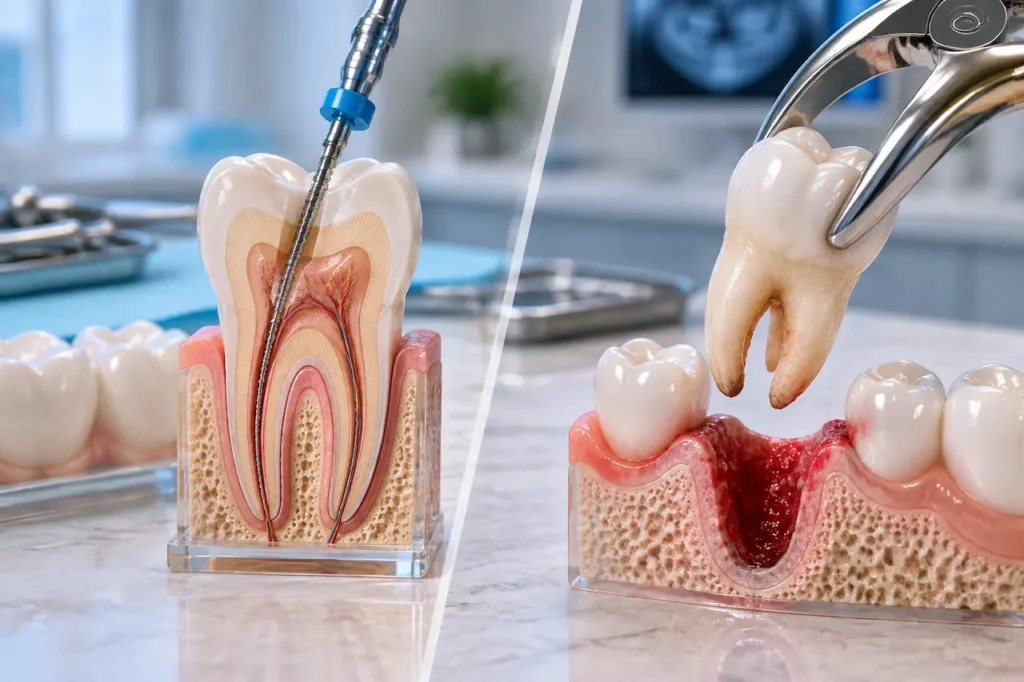
Your dentist just told you that you need either a root canal or an extraction, and now you’re trying to figure out which one makes sense. Both treat severely damaged or infected teeth, but they lead to very different outcomes one saves your natural tooth, the other removes it permanently.
Here’s what you actually need to know about each option, when one makes more sense than the other, and what happens after treatment.
Root Canal vs Extraction: Quick Comparison
| Factor | Root Canal | Extraction |
|---|---|---|
| What It Does | Removes infection, saves natural tooth | Removes entire tooth |
| Procedure Time | 60-90 minutes (one visit) | 20-40 minutes |
| Recovery Time | 2-3 days mild discomfort | 3-7 days, more swelling |
| Cost (DFW Average) | $800-$1,500 | $150-$300 (extraction only) |
| Long-Term Cost | Add $1,000-$1,500 for crown | Add $3,000-$5,000 for implant replacement |
| Success Rate | 85-95% over 10+ years | 100% (tooth is gone) |
The extraction itself is cheaper and faster, but if you want to replace the missing tooth with an implant later, you’ll spend significantly more than a root canal would have cost.
What Happens During Each Procedure
Root Canal Treatment
During a root canal, we remove the infected or damaged pulp from inside the tooth, clean and disinfect the inner chambers, then seal everything with a rubber-like material. The tooth structure stays in place.
You’re numb the entire time. Most patients tell us it feels similar to getting a filling, just longer. After the procedure, your general dentist will place a crown to protect the treated tooth.
Tooth Extraction
An extraction removes the entire tooth root and all. We numb the area, loosen the tooth from the surrounding ligament and bone, then remove it. Simple extractions are quick. Surgical extractions for broken or impacted teeth take longer.
You’ll have an empty socket where the tooth was, which heals over the next few weeks. If you choose not to replace the tooth, the surrounding teeth will gradually shift into that space, which can cause bite problems.
When Root Canal Is the Better Choice
We recommend a root canal when the tooth structure is still solid and savable. Keeping your natural tooth is almost always the best long-term option if it’s possible.
- The tooth has enough healthy structure left to support a crown
- There’s no severe fracture extending below the gum line
- The surrounding bone and gum tissue are healthy
- You want to avoid the cost and time of an implant later
Your natural tooth root stimulates the jawbone and keeps it healthy. Even with a crown, a root canal-treated tooth functions just like your other teeth.
When Extraction Makes More Sense
Sometimes saving the tooth isn’t realistic, and pushing for a root canal would be setting you up for failure.
- The tooth is fractured vertically through the root
- There’s severe bone loss around the tooth from gum disease
- The tooth is too damaged to hold a crown securely
- You have advanced periodontal disease affecting that tooth
- The root canal has already failed multiple times
If you’re dealing with wisdom teeth or a tooth that’s already loose, extraction is usually the straightforward answer.
Recovery and What to Expect After Treatment
After a Root Canal
Most people feel back to normal within two to three days. You might have some tenderness when biting down for the first week, but it’s manageable with over-the-counter pain relievers. You can go back to work the next day. The temporary filling stays in place until your dentist puts the permanent crown on, usually two to three weeks later.
After an Extraction
Expect more swelling and discomfort compared to a root canal. The first 48 hours are the worst. You’ll need to stick to soft foods for about a week and avoid using straws. The extraction site takes about two weeks to close up. If you’re planning on getting a dental implant, we usually wait three to six months before placing it.
Cost Breakdown: What You’ll Actually Pay
People focus on the upfront cost of the root canal versus extraction, but that’s not the full picture. Here’s what the real investment looks like:
Root Canal Total Cost: $1,800-$3,000 (including crown)
Extraction + Replacement Total Cost: $3,150-$5,300 (including implant and crown)
If you skip the implant and leave the space empty, you save money short-term but risk teeth shifting, bite problems, and bone loss that often cost more to fix later.
Frequently Asked Questions
Is a root canal more painful than an extraction?
No. Both procedures are done under local anesthesia, so you don’t feel pain during treatment. Root canal recovery is usually easier less swelling, less discomfort, faster healing.
How long does a root canal-treated tooth last?
With proper care and a quality crown, a root canal-treated tooth can last a lifetime. Success rates are 85-95% over ten years.
Can I just pull the tooth instead of doing a root canal?
Yes, extraction is always an option. But understand that you’re trading a one-time procedure for either a lifetime gap in your smile or a more expensive implant process later. If the tooth can be saved, most specialists recommend saving it.
What happens if I don’t do either procedure?
The infection will spread. You’ll have worsening pain, potential abscess formation, swelling, and risk of the infection entering your bloodstream. If you’re experiencing severe tooth pain, don’t wait.
Ready to get started?
Sigma Dental Specialists is here to help with root canal vs extraction. Reach out today and we’ll walk you through your options, answer your questions, and book a time that works for you.
Call 972-430-9771 or visit Sigma Dental Specialists to schedule your appointment.