Endodontic Retreatment

When a previous root canal fails to heal, retreatment can save your natural tooth and relieve pain.

What is Endodontic Root Canal Retreatment?

With proper care and regular dental maintenance, a tooth that has undergone root canal treatment can often last just as long as a natural, untreated tooth. However, in some cases, a tooth may not heal as expected or may develop new problems months or even years after the original root canal.

When this happens, endodontic retreatment may be recommended to address the underlying issue and give the tooth another opportunity to heal and function properly.

Why Might a Root Canal Need to Be Retreated?

There are several reasons a previously treated tooth may require additional treatment, including:

  • Narrow or curved canals that were difficult to locate or fully treat during the original procedure
  • Complex or additional canals that were not detected initially
  • The tooth was not restored with a permanent crown or restoration soon enough after treatment
  • A crown or filling became loose, cracked, or damaged, allowing bacteria to enter the tooth
  • New decay developed and exposed the previous root canal filling material
  • Continued or recurring infection within the tooth

What Happens During Retreatment?

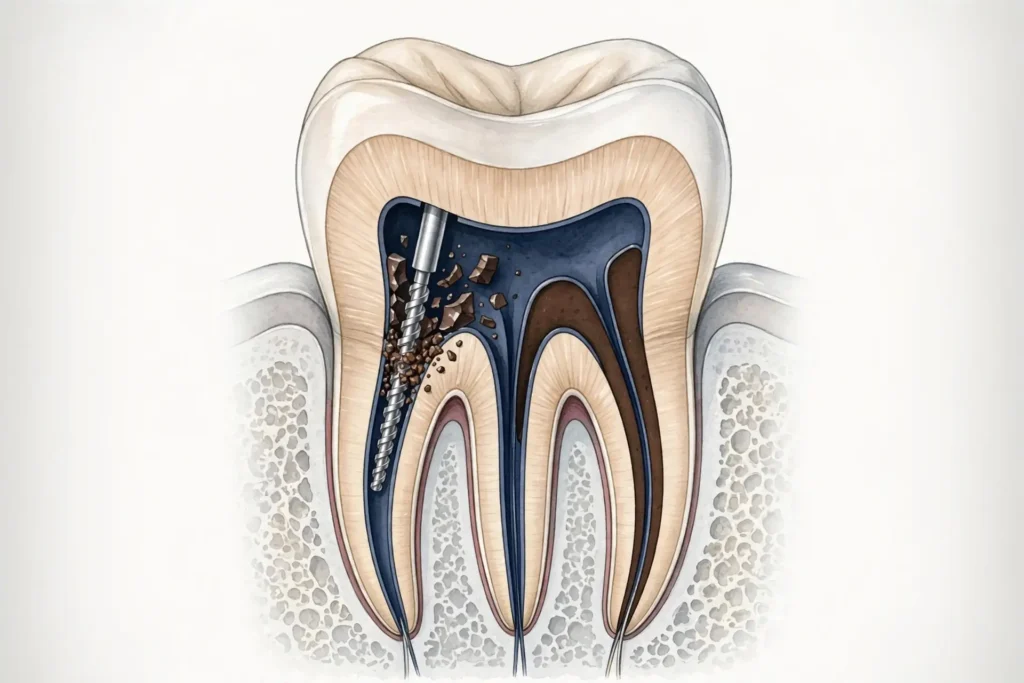
If retreatment is recommended, your endodontist will carefully reopen the tooth to access the existing root canal filling material. The previous material is removed so the canals can be thoroughly examined, cleaned, and disinfected.

Once the canals have been properly treated, they are filled and sealed again to help prevent bacteria from entering the tooth. A temporary filling may be placed to protect the tooth until your final restoration is completed.

Completing Your Treatment

After root canal retreatment, it is important to return to your general dentist as soon as recommended to have the tooth permanently restored with a new crown or other appropriate restoration. This final step helps protect the tooth, restore its function, and reduce the risk of future problems.

Our team will explain each step of your retreatment and answer any questions you may have so you feel comfortable and informed throughout the process.
Signs you may need treatment
Persistent Tooth Pain

Swelling Or Tenderness
New Decay Or Crack
Delayed Restoration

What to expect

1

Diagnose

We evaluate why your previous treatment failed. Common reasons include curved or narrow canals not treated initially, complicated canals that went undetected, delayed crown placement, or a restoration that allowed saliva to contaminate the inside of the tooth.

2

Treat

Once retreatment is selected, we reopen your tooth to gain access to the root canal filling material. This restorative material is removed to enable access to the root canal. We then clean the canals and carefully examine the inside of the problematic tooth for missed canals or new infection.

3

Restore

Once cleaned, we fill and seal the canals and place a temporary filling in the tooth. Immediately following retreatment, you will need to return to your dentist as soon as possible to have a new crown or restoration placed to restore full functionality.

Common questions

How do I know if I need endodontic retreatment?
You may need retreatment if a previously treated tooth becomes painful, swollen, sensitive, or infected again. Symptoms can sometimes appear months or even years after the original root canal procedure, indicating the tooth did not heal properly.
A root canal may fail due to missed or complicated narrow canals, new decay exposing filling material, cracked or loose fillings/crowns, or bacteria re-entering the tooth. In many cases, retreatment can help save the natural tooth and restore oral health.
We reopen your tooth, remove the old filling material, clean and examine the canals, and then fill and seal them again with new material. The process is similar to an initial root canal but focuses on correcting the previous issue and eliminating new infection.
Most patients find retreatment similar to the original treatment. With modern techniques and local anesthesia, endodontic retreatment is typically comfortable and effective. You can usually return to your normal routine quickly.
Immediately after retreatment, you must return to your restorative dentist as soon as possible for a new crown or restoration. This final step is crucial to protect the tooth and restore full functionality and prevent future contamination.