Periodontal Disease Treatment
Protect your gums and save your teeth. Early treatment for gum disease prevents tooth loss and restores oral health.
What is periodontal disease?
Periodontal disease, commonly known as gum disease, is caused by harmful bacteria that build up around the teeth and gums. Without proper treatment, it can damage the tissues and bone that support your teeth and may eventually lead to tooth loss.
What Causes Gum Disease?
Plaque buildup is the primary cause of gum disease, but several other factors can increase your risk. These may include hormonal changes, certain medical conditions such as diabetes, medications, smoking or tobacco use, poor oral hygiene, and a family history of gum disease.
Gum disease generally develops in two stages: gingivitis and periodontitis.
Gingivitis
Gingivitis is the earliest stage of gum disease and occurs when plaque and bacteria build up around the teeth, causing the gums to become irritated and inflamed. It is often painless, so many people may not realize they have it.
Common signs include red, swollen, or tender gums, bleeding when brushing or flossing, and persistent bad breath. With proper care and treatment, gingivitis can often be reversed. If left untreated, however, it may progress to periodontitis.
Periodontitis
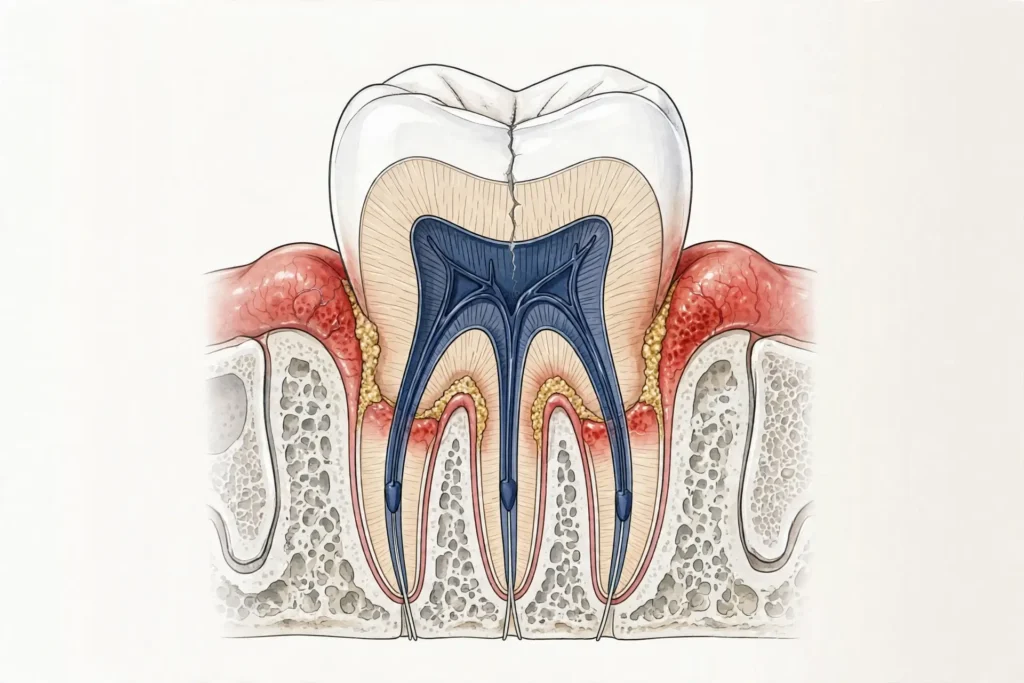
Periodontitis is a more advanced form of gum disease that affects the gums and bone supporting your teeth. As inflammation progresses, the gums can pull away from the teeth, creating pockets where bacteria and debris can collect.
Over time, this infection can cause the supporting bone and tissue to deteriorate. As the bone supporting the teeth is lost, teeth may become loose and, in more advanced cases, may eventually need to be removed.
One of the challenges of periodontal disease is that it can develop with little or no pain. Regular dental visits, good brushing and flossing habits, and early treatment are important for maintaining healthy gums and protecting the teeth that support your smile.
Signs you may need treatment
Red & Swollen Gums

Bad Breath
Receding Gums & Pockets