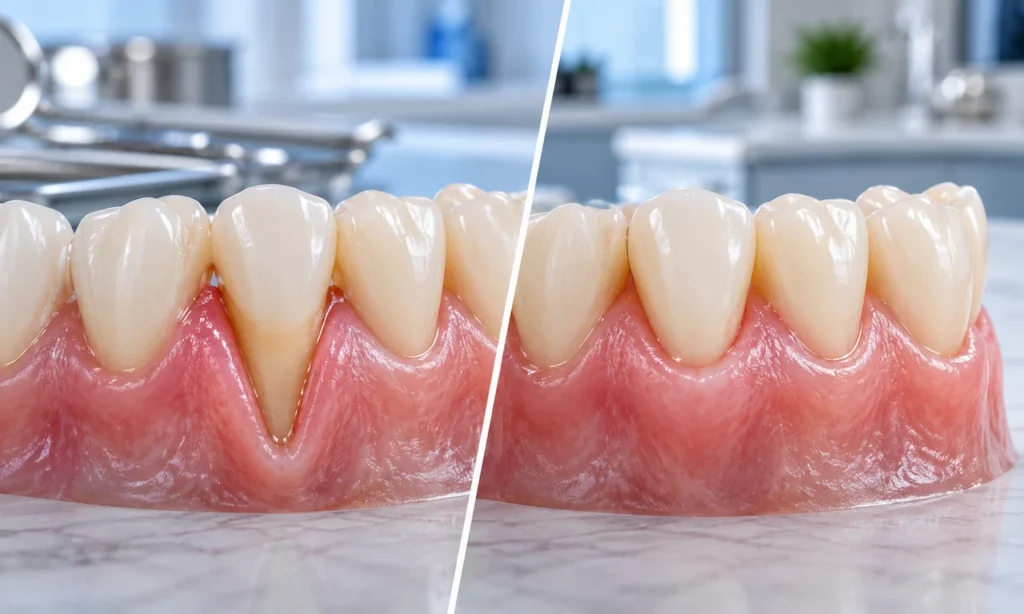
If your dentist mentioned gum grafting or you’ve noticed your teeth looking longer than they used to, you’re probably wondering whether you actually need this procedure. The short answer: not everyone with gum recession needs a graft, but if you’re experiencing sensitivity, bone loss, or aesthetic concerns, it’s time to have a serious conversation with a periodontist.
Here’s exactly when gum grafting becomes necessary and when you can safely wait and watch.
Signs You Need a Gum Graft
You need a gum graft when recession is causing functional or aesthetic problems that won’t improve on their own. Gum tissue doesn’t grow back naturally once it’s lost.
Severe Tooth Sensitivity
If exposed roots make eating or drinking painful, that’s a strong indicator. When gum tissue recedes, the root surface becomes exposed. Unlike the crown of your tooth, the root has no protective enamel layer.
Progressive Recession
Recession that’s worsening over time won’t stop on its own. If your dentist has measured increasing recession at consecutive visits, grafting may prevent further damage and bone loss.
Visible Root Exposure
When more than 3mm of root surface is exposed, or when you can see a noticeable color difference between tooth and root, grafting is usually recommended. This isn’t just cosmetic exposed roots are vulnerable to decay and wear.
Bone Loss Around the Tooth
If X-rays show bone deterioration along with gum recession, you’re at risk of losing the tooth. Grafting can help stabilize the area and protect the remaining bone structure.
Planned Dental Work
If you’re getting orthodontic treatment, dental implants, or crowns in an area with recession, your dentist may recommend grafting first to create a healthier foundation.
When You Can Wait
Not all recession requires immediate treatment. If you have minor recession with no symptoms, no bone loss, and it’s not getting worse, we often recommend monitoring it every six months instead of jumping straight to surgery.
Mild recession that’s stable, caused by aging or thin tissue rather than gum disease, may never need grafting. Your periodontist should evaluate the cause, progression rate, and your overall oral health before recommending surgery.
What Causes Gum Recession
Understanding the cause helps determine whether grafting will solve the problem or if you’ll just end up with recession again. Common causes include:
- Aggressive brushing: Scrubbing too hard or using a hard-bristled brush wears gum tissue away over time
- Periodontal disease: Chronic inflammation destroys gum and bone tissue this requires treatment before grafting
- Genetics: Some people are born with thin gum tissue that’s more prone to recession
- Orthodontics or tooth position: Teeth positioned outside the bone or moved too quickly can develop recession
- Grinding and clenching: Excessive force damages gum tissue and bone over time
- Tobacco use: Smoking reduces blood flow and impairs healing, making recession more likely
If periodontal disease is the cause, we need to get that under control with scaling and root planing before considering a graft.
Types of Gum Grafts
The type of graft depends on how much tissue you need and where the recession is located. Our periodontists evaluate each case individually to determine the best approach.
Connective Tissue Graft
The most common type. We take tissue from the roof of your mouth and place it over the exposed root. This provides the best root coverage and most predictable results.
Free Gingival Graft
Tissue is taken directly from the palate and attached to the receded area. This is used when you need to thicken existing gum tissue rather than cover roots.
Pedicle Graft
Tissue is borrowed from adjacent gums rather than the palate. This only works if you have plenty of gum tissue near the recession site.
What Happens If You Don’t Get the Graft
Skipping a necessary graft doesn’t just mean continued sensitivity. Over time, untreated recession can lead to root decay, bone loss, and eventually tooth loss. Root surfaces are softer than enamel and decay faster once exposed.
That said, if your periodontist tells you grafting is optional and primarily cosmetic, you’re not damaging your long-term oral health by waiting or declining treatment.
Frequently Asked Questions
Can gum recession reverse without surgery?
No. Once gum tissue recedes, it doesn’t grow back on its own. You can prevent further recession by addressing the cause — switching to a soft toothbrush, treating gum disease, wearing a nightguard if you grind — but you can’t restore lost tissue without grafting.
How painful is gum graft recovery?
Most patients report discomfort rather than severe pain. The donor site on the roof of your mouth is usually more uncomfortable than the graft site itself. We provide pain management instructions and most people return to normal activities within a few days.
Does insurance cover gum grafts?
It depends on whether the procedure is deemed medically necessary or cosmetic. Grafts performed to treat sensitivity, prevent bone loss, or prepare for other dental work are typically covered at least partially.
How long does a gum graft last?
When performed correctly and the underlying cause is addressed, gum grafts are permanent. The grafted tissue integrates with your existing gums and functions just like natural tissue.
Ready to get started?
Sigma Dental Specialists is here to help with when do you need a gum graft. Reach out today and we’ll walk you through your options, answer your questions, and book a time that works for you.
Call 972-430-9771 or visit Sigma Dental Specialists to schedule your appointment.