Wisdom Teeth Removal

Prevent infection and crowding. Safe, comfortable removal of impacted wisdom teeth with expert care.

What is wisdom teeth removal?

Wisdom teeth, also known as third molars, are the last set of teeth to develop and typically appear during the late teens or early twenties. Because they are located at the very back of the mouth, there may not always be enough room for them to erupt properly.

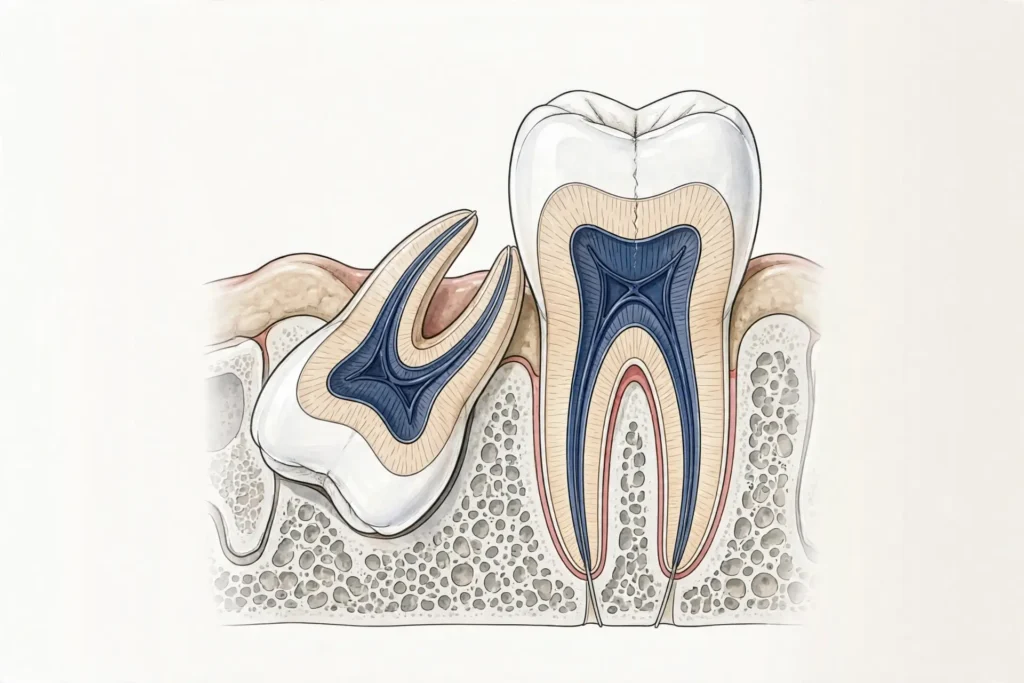
When a wisdom tooth does not have enough space to fully emerge, it can become impacted, remaining partially or completely beneath the gum or bone. Impacted wisdom teeth may contribute to pain, infection, decay, gum problems, or damage to neighboring teeth.

Why Might Wisdom Teeth Need to Be Removed?

Wisdom tooth removal may be recommended when the teeth are impacted or are causing, or are likely to cause, problems. Depending on their position, wisdom teeth can be difficult to keep clean and may increase the risk of infection, decay, gum disease, or damage to nearby teeth.

Your dentist or oral surgeon will evaluate the position and development of your wisdom teeth to determine whether removal is appropriate.

How Do We Determine If Removal Is Needed?

An examination and dental X-rays are used to evaluate your wisdom teeth and the surrounding structures. These images allow your doctor to see whether the teeth are impacted, how they are positioned, and whether they are affecting nearby teeth or bone.

Based on your examination, your doctor will discuss your treatment options and create a plan based on your individual needs.

What Happens During Wisdom Teeth Removal?

Before the procedure, your doctor will review your medical history, examine the area, and discuss your sedation and treatment options. Once you are comfortable, the appropriate anesthesia or sedation will be administered.

For an impacted wisdom tooth, a small opening may be made in the gum to access the tooth. The tooth is then carefully removed, and the area may be closed with sutures. The same process is performed for any additional wisdom teeth that require removal.

Some swelling, soreness, and tenderness are normal during the first few days after surgery. Your care team will provide detailed instructions to help you manage your recovery and protect the surgical sites as they heal.

If you have questions about your wisdom teeth or have been experiencing pain or swelling in the back of your mouth, contact our office to schedule an evaluation.
Signs you may need treatment
Impacted / Stuck
Pain & Infection
Damage To Neighbors
Cysts Or Decay

What to expect

1

Diagnose

We evaluate your wisdom teeth through X-rays before recommending extraction. We check if they are impacted (mesial, horizontal, distal), causing recurrent infection, pushing adjacent teeth, or if there is rarely a functional need to keep them. Consultation determines if removal is necessary to prevent more serious complications.

2

Treat

Wisdom teeth removal is a routine procedure performed by oral surgeon. It involves making an incision in the gum, removing any obstructing bone, and extracting the tooth using special tools with careful removal to avoid damage to surrounding gum, bone, or nerves. Local anesthesia or general anesthetic for complex cases requiring bone cutting is used for your comfort.

3

Restore

After extraction, we provide aftercare instructions. Risks like dry socket, infection, and rare nerve damage are minimized with proper technique. Since wisdom teeth often have no functional need, removal prevents infection, damage to other teeth, and protects your overall oral health. Recovery is typically managed with medication and follow-up.

Common questions

Why do wisdom teeth need to be removed?
They often need extraction if they are impacted (stuck and unable to fully erupt), misaligned, causing crowding, recurrent pain or infection (pericoronitis), pushing adjacent teeth causing damage/decay, or developing cysts. Since there is rarely a functional need, they are usually extracted if they develop problems.
After evaluation with X-rays, the surgeon makes an incision in the gum, removes any bone obstructing the tooth, and extracts it using special tools. General anesthetic may be used for complex cases. Careful removal avoids damage to surrounding tissue, bone, nerves, and adjacent teeth.
The procedure is done under local anesthesia or general anesthetic so you are comfortable. Afterward there may be mild swelling and discomfort, which is normal for surgical procedures. Pain medication is recommended and most patients resume normal activities within a few days.
Potential complications include bleeding, dry socket, infection, damage to adjacent teeth, injury to surrounding tissue, and rare nerve injury or fracture of root. Removal early helps prevent more serious complications like infection or damage to other teeth.
Recovery varies but most heal within a few days to a week with proper aftercare including good oral hygiene, soft foods, and avoiding strenuous activity. You will receive detailed post-op instructions, and we schedule follow-up to ensure smooth healing.